Role
Product Design Lead
Year
2020
Klivvr is a fintech app. Thousands of users moving money, expecting instant, frictionless transactions. Behind that experience sat an operations team working inside a back office that was never built to handle what the product had become.
The skeleton was there. The layout existed. But it couldn't hold the weight of 12 roles, hundreds of workflows, and the speed a fintech operation actually demands. Every bottleneck inside the Ops Console landed directly on a customer's screen.
That's not a UI problem. That's a system design problem.
Design Ops Console for Customer Impact, Not Internal Convenience
The obvious path was to expand the existing layout, add the missing features, and ship it. I didn't take it. I reframed the entire build around one question:
"What does the Ops Console need to do so a Klivvr customer never feels a problem? "
That shift changed everything. It stopped the project from becoming a feature list and turned it into an experience with a clear north star.
To make that real across 12 distinct roles, I replaced traditional persona mapping with Archetype Mapping to describe how they operate. With over 720 customized access combinations across every role, the Ops Console needed a model that scaled without collapsing under its own complexity.
Every role mapped to a single interaction model: View. Act. Manage. Three modes. One mental model. Regardless of which role you carried, you always knew where you were and what you could do inside the Ops Console.
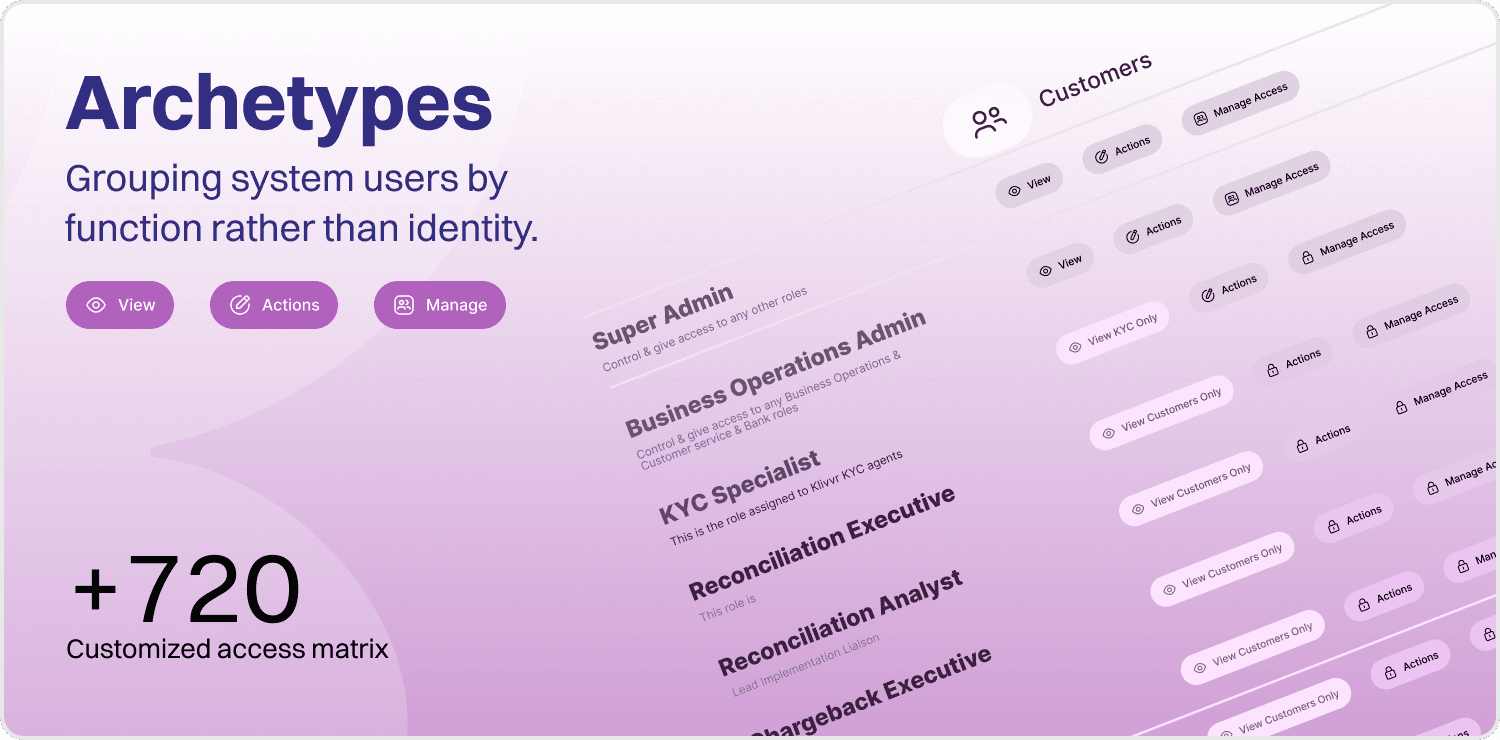
Building a Console That Moves at Fintech Speed
With the model set, three things had to work perfectly together:
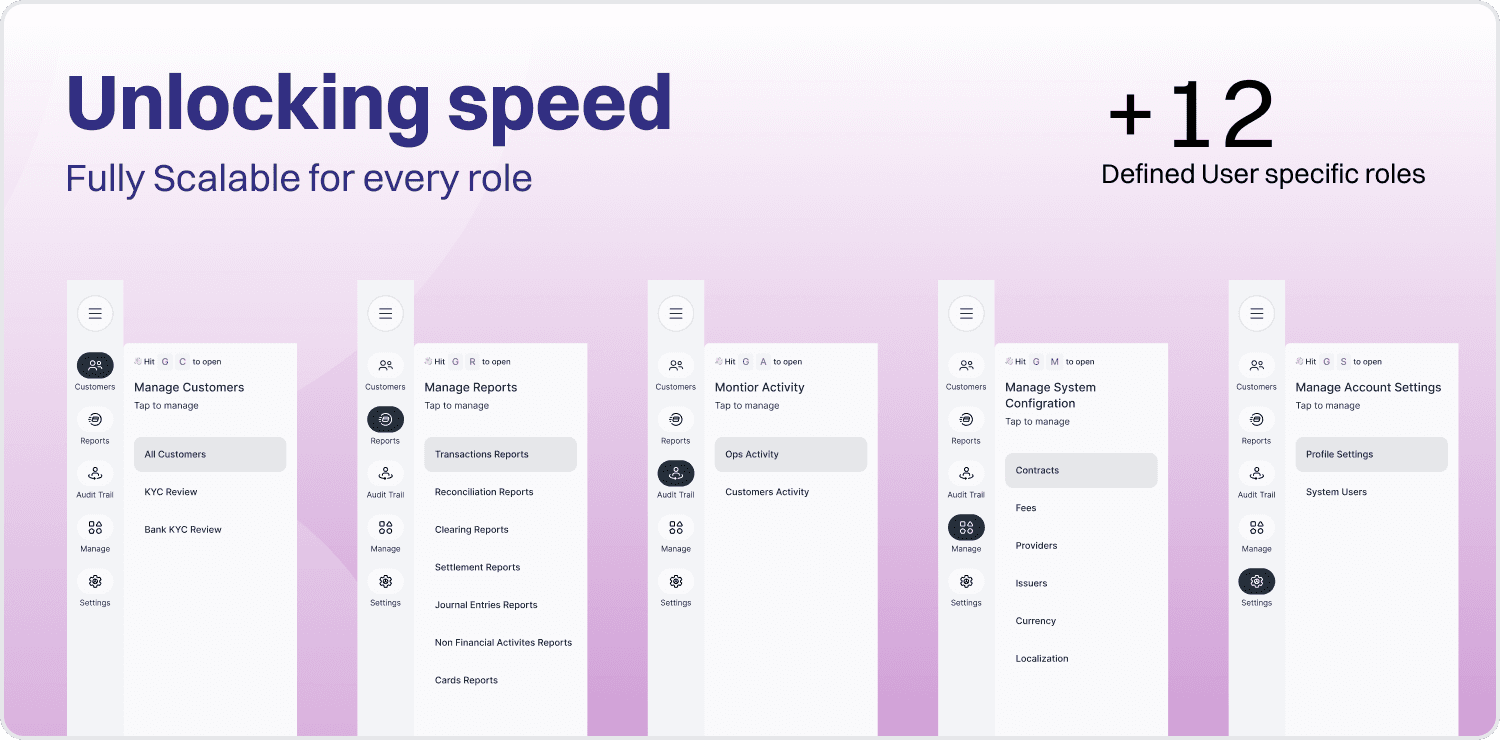
A scalable navigation menu customized per role. No two roles see the same Ops Console. Each one opens into exactly the tools and permissions their archetype requires, nothing more. The navigation scales as roles grow without restructuring the system underneath.
An adaptive layout with flexible visual hierarchy. Fintech operations screens carry enormous information density. The layout needed to breathe and compress based on the task, keeping critical actions reachable and secondary information out of the way.
Keyboard shortcuts baked into the core. Ops teams live inside the Console for eight hours a day. Mouse-dependent interfaces bleed time at scale. Shortcuts turned navigation from a series of clicks into muscle memory.
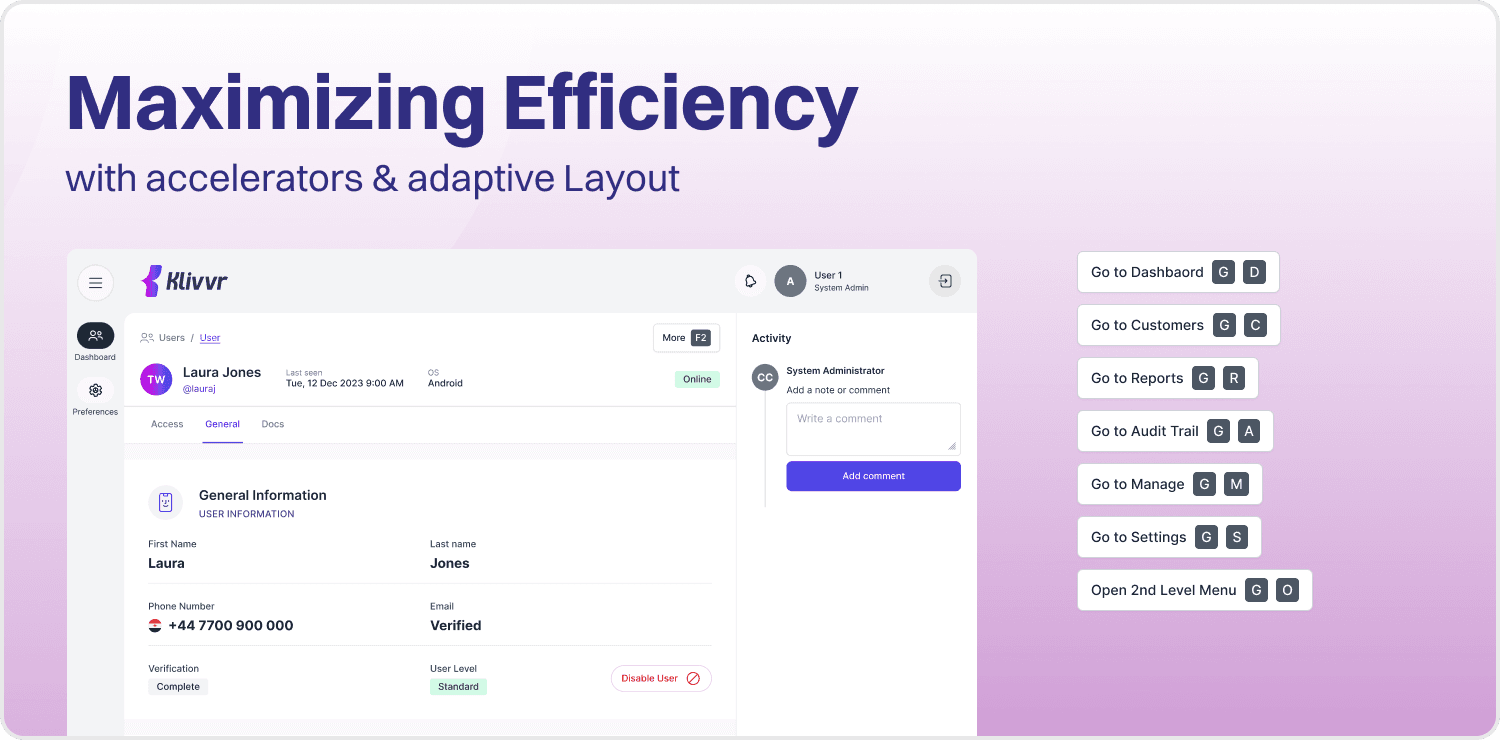
One Interaction Model. 12 Roles. 720 Access Combinations. Zero Confusion.
Klivvr's operations team went from working inside a layout that fought them to working inside an Ops Console built around what their customers needed from them.
The Ops Console stopped being the bottleneck. It became part of the product.
When a Customer Has a Problem, Console Shows Exactly What They Saw
The sharpest outcome was how the team solved transaction issues.
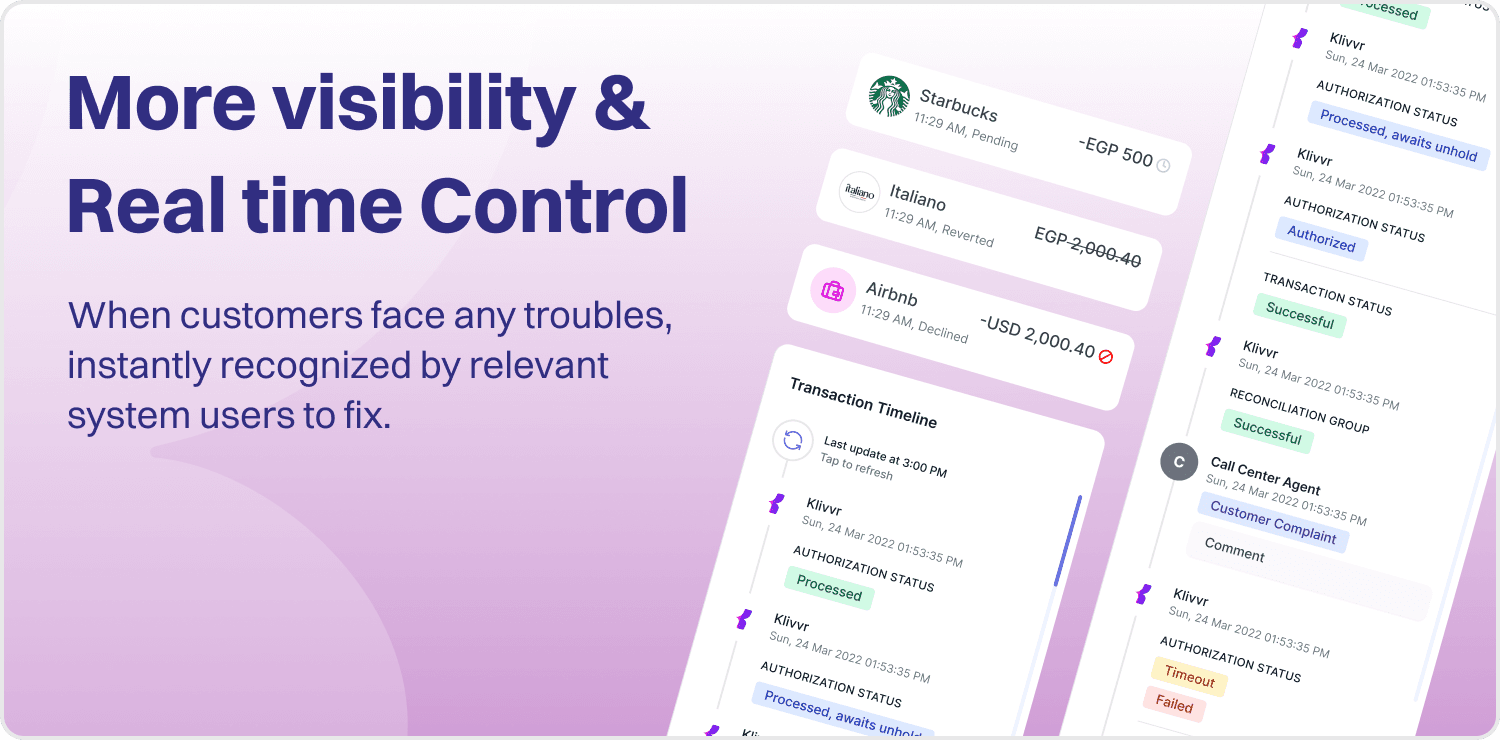
Instead of hunting through logs and cross-referencing systems, the Ops Console now mirrors a customer's transaction as a timeline, showing exactly what the customer experienced on their mobile screen. Every event, every failure point, every required action sits in sequence. The operator knows what happened, when it happened, and what to do next without leaving the screen.
Speed went up. Errors went down. The customer on the other end stopped waiting.