Role
Product Design Consultant
Year
2022
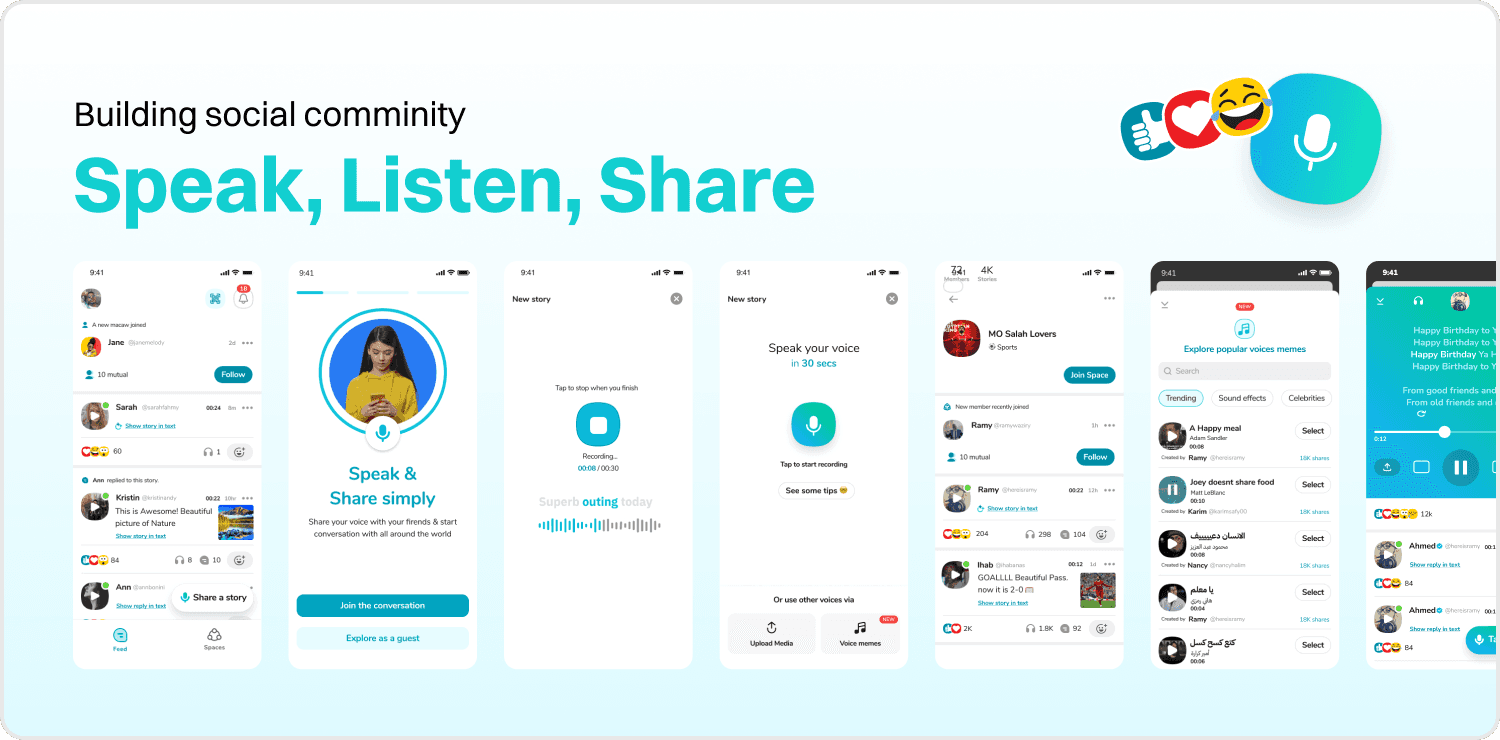
🗂️ The brief : Take Macaw, a voice-based social app, and make it look better. New colors, cleaner layouts, six weeks, done.
Polishing a broken experience isn't design work. It's decoration. Before a single pixel moved, I needed to answer one question: what does Macaw actually need to survive?
The Biggest Bet: Strategy Before Screens
I presented a Double Diamond framework and made the case for two experiments before touching the interface. Nothing in the contract covered this.
The pitch was simple: ship prettier screens over broken UX and you've set money on fire.
They leaned in.
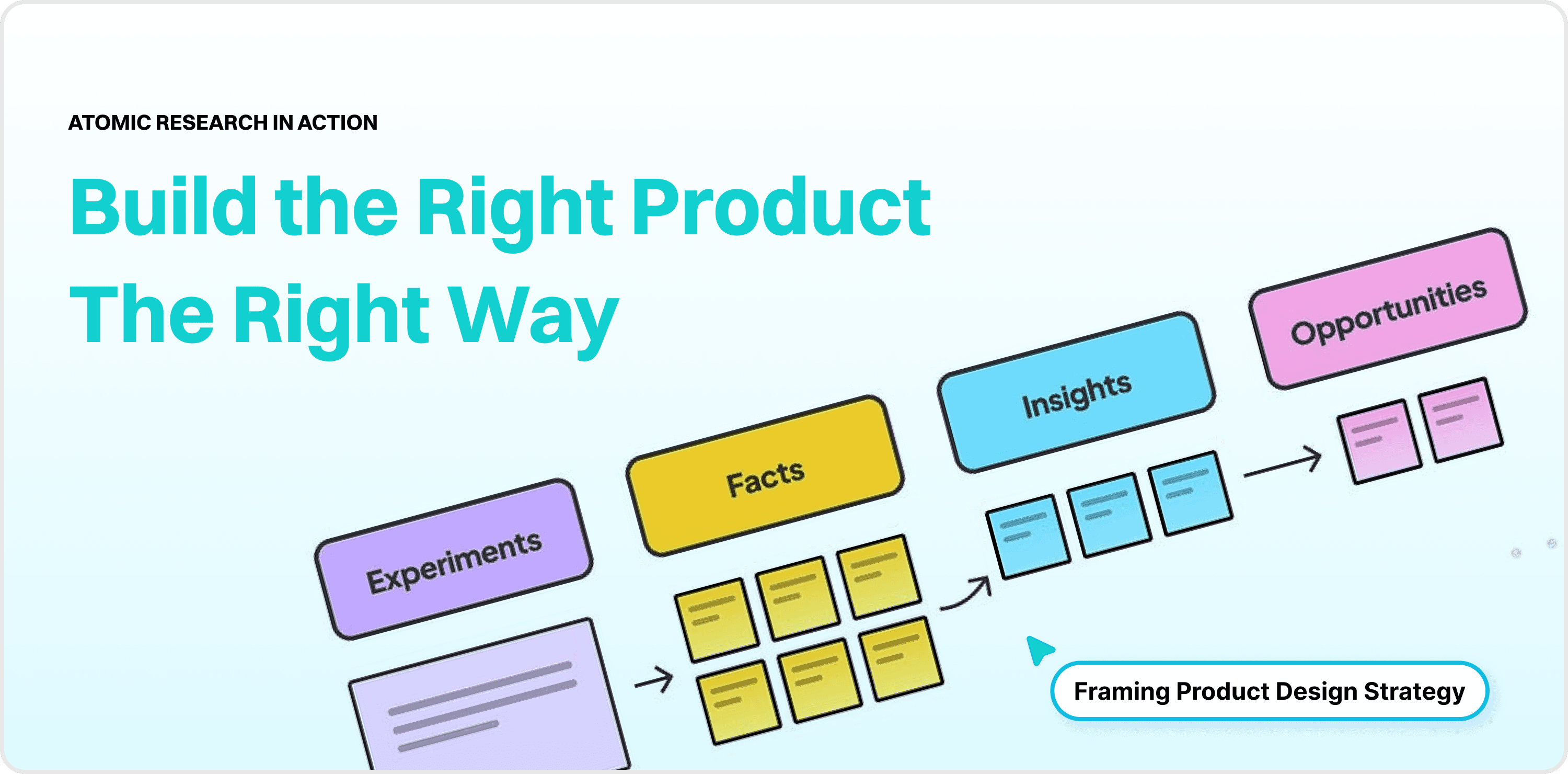
The plan ran on four questions:
What experiment do we need to run?
What did we find?
What did we learn?
What could we improve?
2 Experiments. No Guessing.
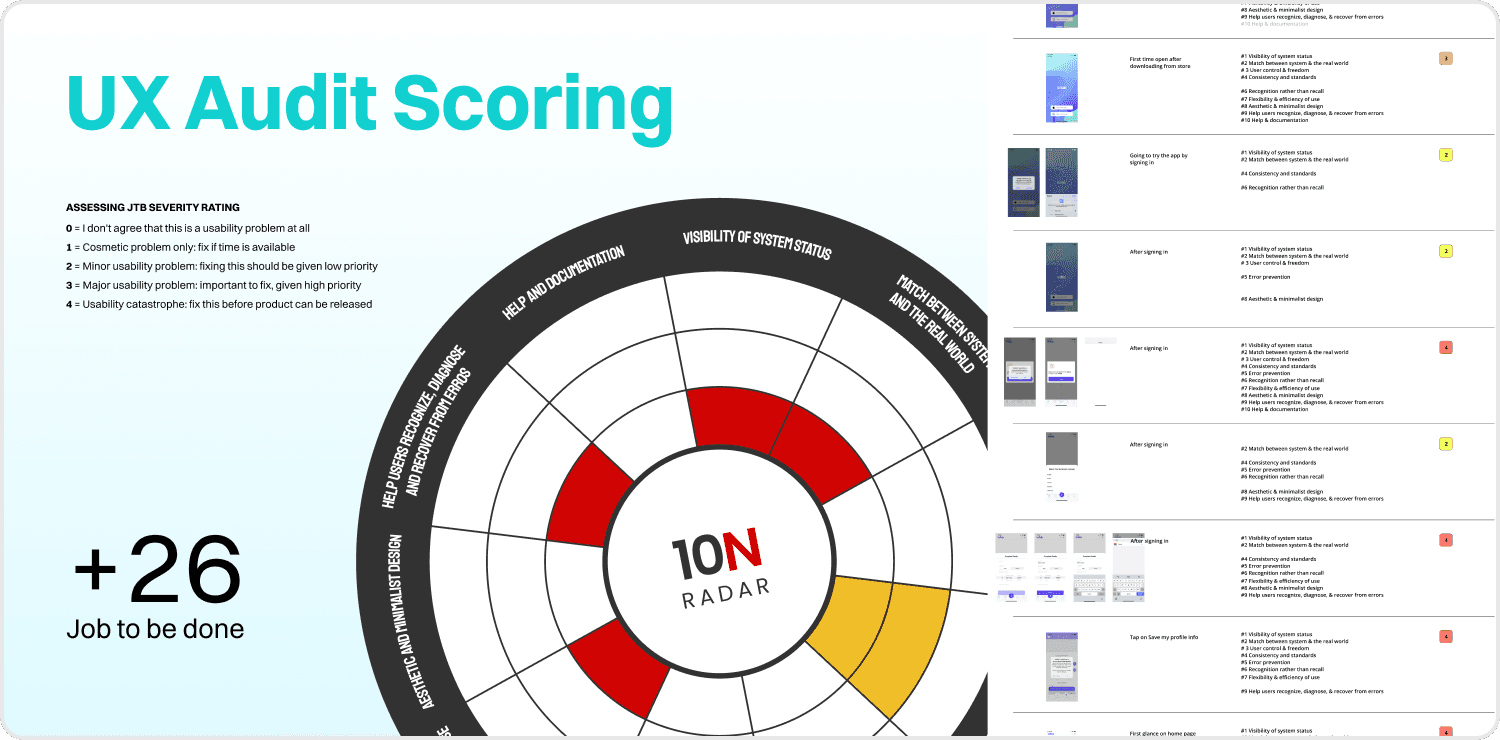
Experiment 1: Macaw UX Audit. Scored every screen in the existing app against usability heuristics. Teams that live inside a product stop seeing its friction. I had a fresh perspective, so noticing gaps in the experience was no challenge for me.
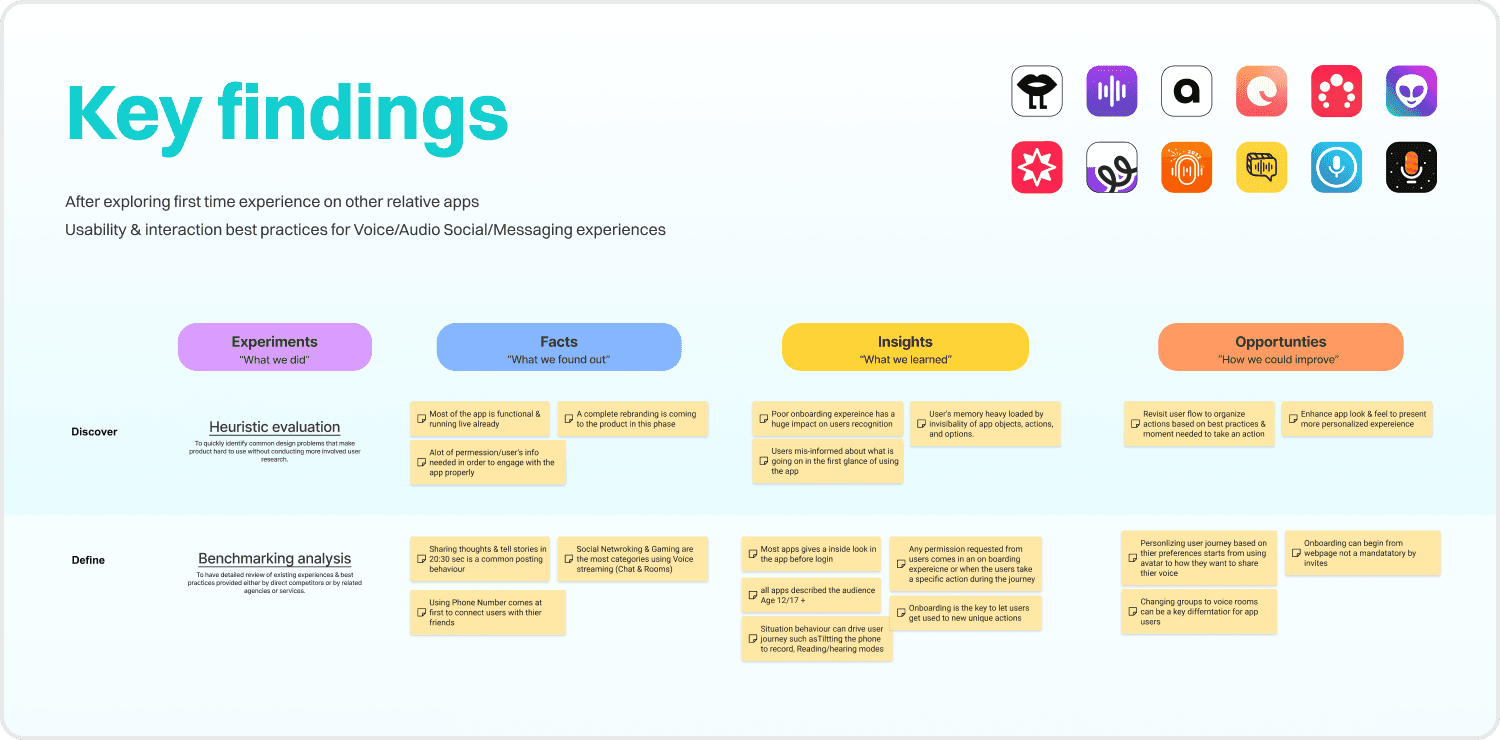
Experiment 2: First-interaction benchmarking across 10 voice-based apps. Mapped the critical first 60 seconds across every major competitor. The moment after download where a new user decides this is worth their time or isn't. Nobody at Macaw had ever done this before.
The Gap Nobody at Macaw Had Named
The benchmarking cracked it open.
Macaw had no engineered path from download to habit. Users showed up, heard nothing that grabbed them, and disappeared. The product was treating acquisition like the finish line when it's actually the starting gun.
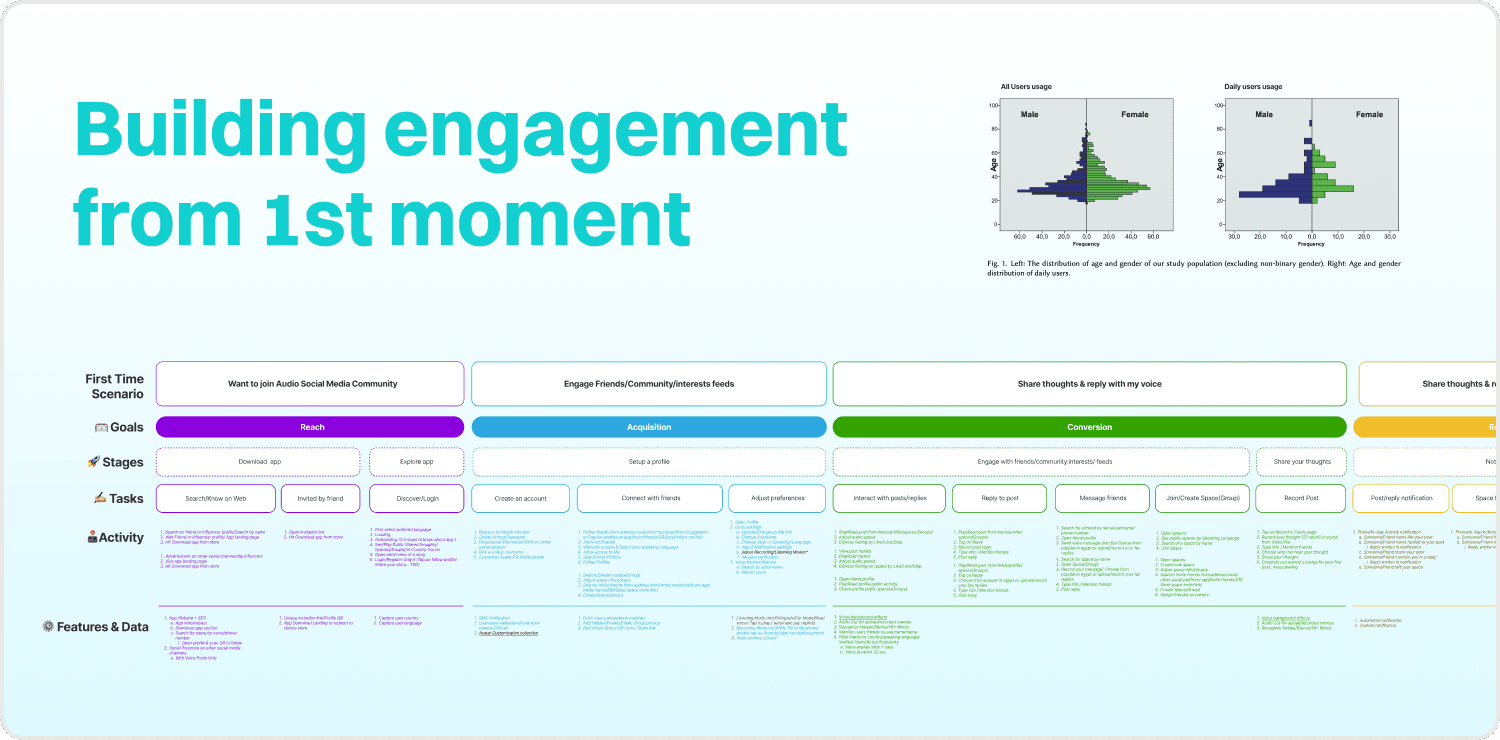
I built a goal-based user flow that locked Macaw's business objectives directly to customer behavior at every stage:
Reach & Acquisition → a download and profile setup that earns trust in under two minutes
Conversion → a first comment, a first reply, the first moment Macaw feels social
Retention → a first post shared, badges earned, a reason to come back tomorrow
Every stage had a designed trigger. Nothing relied on a user figuring it out themselves.
Then came the idea that changed the room: Voice Memes. Ready-made voice interactions users could fire off as post replies without recording a single word. Built for the person who wants to participate but isn't ready to perform. Users could also create their own. It punched a door into Macaw for an audience that every other voice app was quietly losing.
Macaw Came for Paint & Left With a Blueprint.
The team walked away with a product roadmap, a prioritized fix list, a competitive benchmark they'd never had, a retention-focused user flow, and a content mechanic with genuine market differentiation.
The UI refresh became phase two and delivered in time.
Strategy was always phase one. They just didn't know it yet.